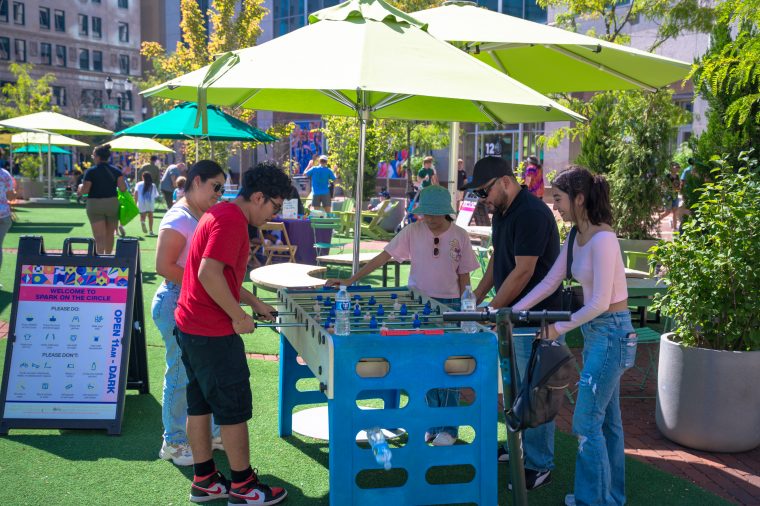
A recent visit to Indianapolis reminded me all over again how special this city is — its people, its energy, its generosity of spirit. Retracing familiar ground, I found myself once more thinking about SPARK and how it transforms the iconic heart of the city that is Monument Circle into something more than a landmark — into a place alive with the rhythm of everyday life.
Indianapolis has always had a strong sense of community, that “Midwest neighborliness” visitors (myself very much included) notice and residents treasure. And SPARK celebrates this. The lunchtime regulars, the office workers, the musicians and poets, the volunteers who make the space sing.
I first experienced SPARK in its opening year, 2015, when I was in Indianapolis researching Big Car Collaborative’s practice for my PhD. I spent days at Monument Circle, observing how a civic landmark was reshaped through everyday encounters.
What I saw was not a temporary festival but a carefully curated artwork that treated public life itself as material. Since then, I have followed Big Car’s work closely, writing about SPARK in Arts in Place (2017) and keeping in touch with the organization as it has evolved. This long view allows me to see SPARK as a sustained contribution to the international conversation on placemaking and socially engaged art.
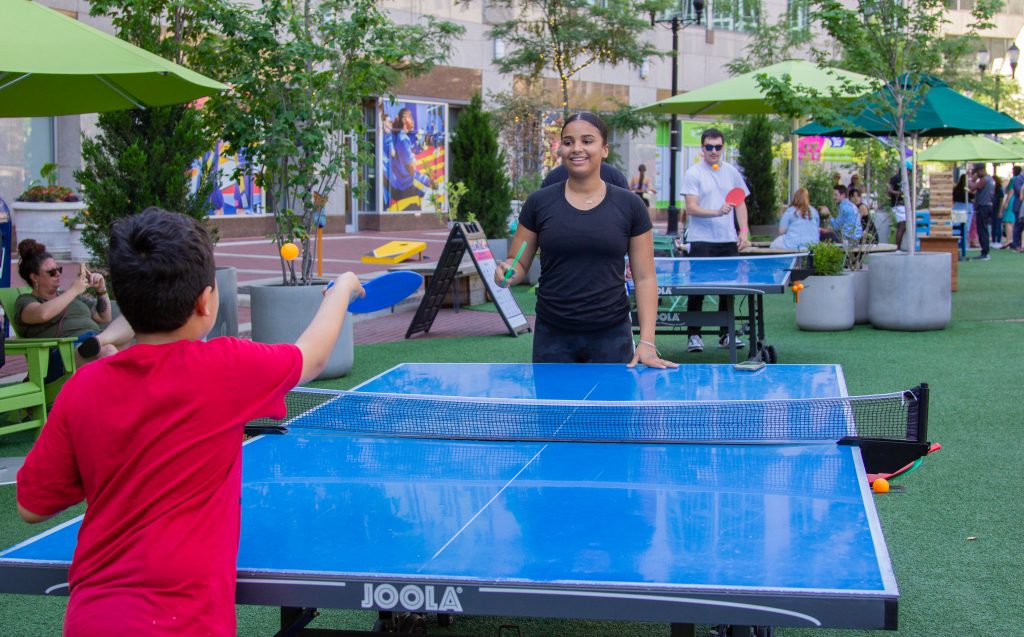
SPARK has never been about spectacle. Its beauty lies in the ordinary, the small, human moments that make Indy feel like home. Whether it’s a game of ping pong, a quiet poem at lunchtime, or children drawing with chalk under the monument’s shadow, SPARK reminds us that creativity lives beyond galleries or stages.
It’s here in the ways people use and care for their city. And it’s not about changing the city. It’s about seeing the city and its people at their best. It doesn’t import ideas from elsewhere. It grows them from the ground up.
Big Car’s current work at the Circle — in partnership with the Downtown Indy Alliance and the City of Indianapolis — shows how art can bring out the pride that already lives here. The sound of laughter across the plaza, a smile between strangers, a family lingering a little longer: these are the markers of a city that knows its worth.
I’ve heard SPARK described as a “living room” for downtown. But perhaps it’s better thought of as Indy’s front porch — that very American place of welcome, hospitality, and easy connection. Just as the porch has long been where neighbors meet, share stories, and watch the world go by, Monument Circle becomes a shared threshold between public and private life, where everyone is welcome to sit for a while and feel part of this place they call home.
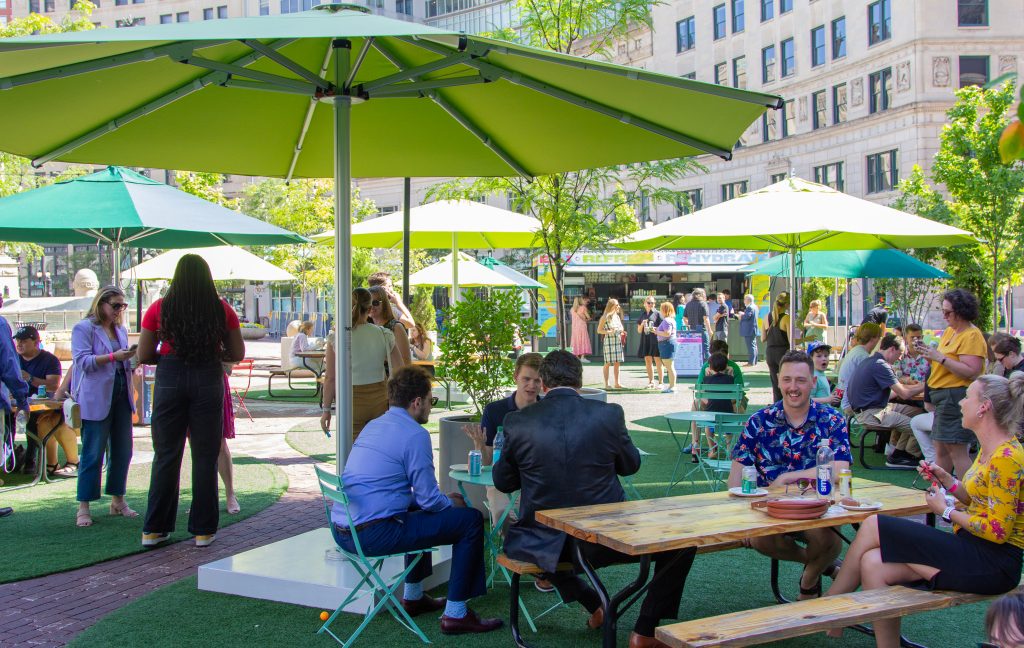
With SPARK, every visitor — whether a lifelong Hoosier or someone just passing through — finds a sense of belonging. It shows that joy itself is a civic strength, and that pride in place isn’t something to be built. It’s something to be felt. Success isn’t measured in visitor numbers alone, but in smiles, conversations, and the quiet sense that downtown is ours. Big Car’s artists have always understood that these moments are anything but trivial. They are what give a city its heart.
And so, as I walk Indy again, I see SPARK in the spirit of the place, in the way Indianapolis carries itself: confident, kind, and quietly proud. In celebrating the everyday — the shared bench, the impromptu chat, the laughter over a lunchtime poem — SPARK celebrates Indianapolis itself.
Dr. Cara Courage — a culture, communities, and place consultant based in the United Kingdom — has published three books on placemaking and socially engaged art with Routledge. Named in the top 10 of place thinkers worldwide, Courage has studied Big Car’s work in Indianapolis since 2015.